Timing your inspection around exchange in Newcastle
How to use the NSW cooling-off, and why auction buyers have none — access, tenants, wet weather, and the pace of the Hunter market between open home and exchange.
By Sophie Brennan, Consumer editor · 21 May 2024 · Updated 2 November 2025 · 10 min read
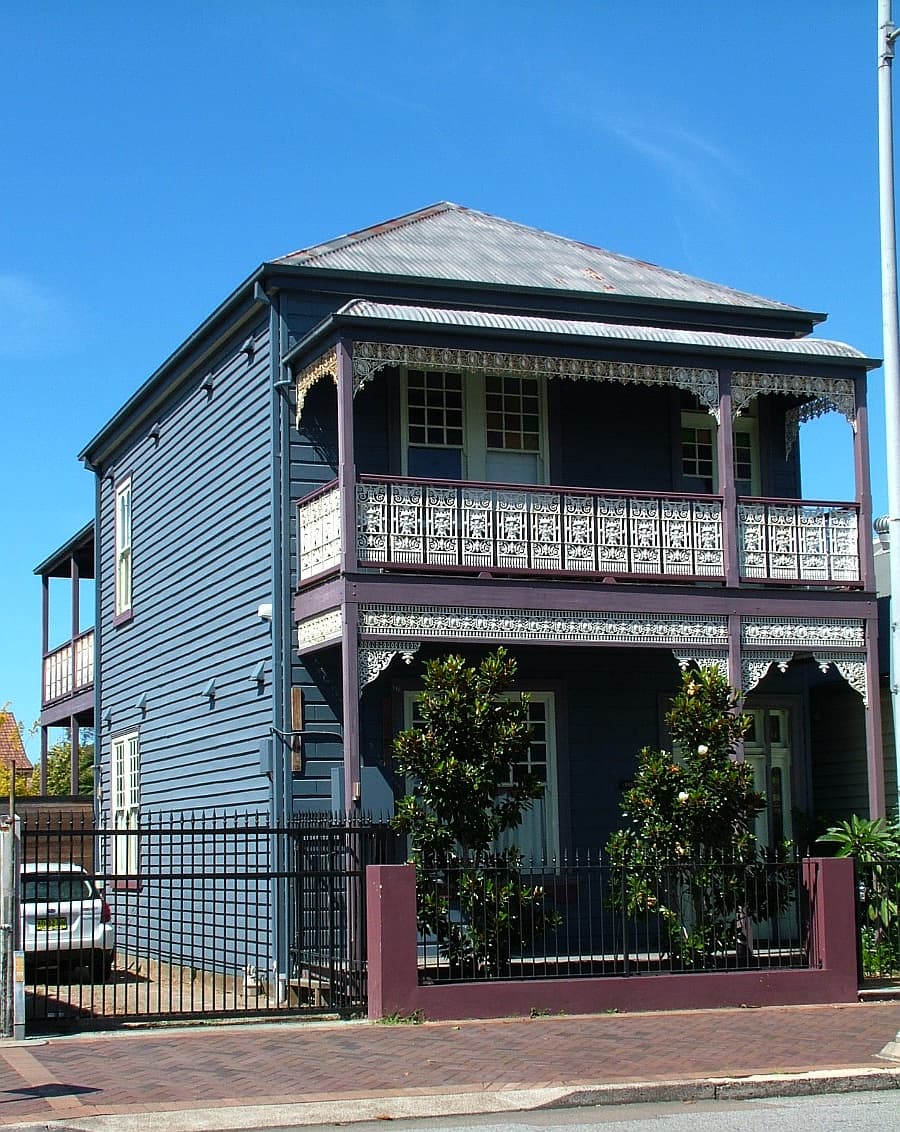
Photo: Mark McIntosh. Victorian townhouse, Hamilton. CC BY-SA 3.0. Source on Wikimedia Commons. Licence. Full credits on the image credits page.

Newcastle still likes to hurry people from an open home on a Saturday to a signature on a Wednesday. The hurrying is not always malice. It is a habit of a market that has spent years treating hesitation as a luxury. The inspection is where that habit becomes expensive.
This is an essay about time: the five business days of a private-treaty cooling-off in New South Wales, the absence of those days at auction, and the practical work of getting a stranger into a house that may still be lived in. For what the inspector is paid to see, read what a pre-purchase building inspection covers. For how sale method changes the tactics, there is a companion piece on auction versus private treaty.
The five days are not a holiday
On a standard residential private treaty in NSW, a buyer who has not waived cooling-off has a short window after exchange in which to rescind. The price of changing your mind is a fraction of the purchase price, paid as a penalty, not as a refundable deposit. That is the legal shape. The practical shape is ruder.
Five business days disappear as soon as you treat them as thinking time. They are working days for inspectors, for pest technicians, for a plumber with a camera, for a conveyancer who is already reading the contract. If you exchange on a Thursday, the weekend is not extra inspection time unless you booked it weeks ago. If a public holiday sits in the window, count it as lost, not as a gift.
The useful private-treaty pattern in this city looks like this:
- you have already chosen a licensed inspector — someone with a current NSW licence — before you are “serious”
- you book the inspection the morning you decide to make an offer, not the morning after exchange
- you attend, or send someone who will listen
- you read the PDF that night, limitations first — the method is in the companion essay
- you spend the remaining days on the two or three items that actually move money, not on a second open home for the curtains
Waiving cooling-off to look keen is a fashion. It is also how people buy a roof they have not seen. If an agent is pressing you to waive so the vendor will “take you seriously”, you are being asked to give away the only cheap insurance in the process. Sometimes the house is worth that. Often it is the agent’s timetable, not yours.
Auction has no cooling-off
A successful bid at a NSW auction is a contract. There is no five-day think. There is no polite rescission for a fraction. If you have not had a building inspection — and, in the Hunter, a timber pest inspection — you are buying with your eyes and the vendor’s adjectives.
That means the inspection has to sit before auction day, early enough that you can still:
- read the report without a queue behind you
- ring the inspector
- get a specialist onto a “further investigation” item if the money is large
- decide a walk-away price and go home if the house is not the house you were sold
Last-minute pre-auction inspections exist because buyers leave it late, not because the method is wise. A slot on the morning of the auction gives you a verbal from the driveway and a PDF you will skim in the car. That is not a reading. It is a way to say you “had a report” if anyone asks later.
If you cannot get access before auction, you do not have an inspection problem. You have a bidding problem. The walk-away essay is relevant before you take a number.
Access is the hidden timetable
The standard does not require an inspector to move a houseful of furniture, cut a hole, or argue with a tenant. It does require them to try, and to say when they could not. Your job is to make the try possible.
Vendor-occupied houses are usually the easy ones, if someone is willing to be out or quiet for a couple of hours. Ask that the roof manhole is not buried under stored winter, that the subfloor door is unlocked, and that the dogs are elsewhere. These are not fussy requests. They are the difference between a report and a list of limitations.
Tenanted houses are the usual mess in Hamilton, Cooks Hill, Islington and the older lake towns. A tenant has a right to quiet enjoyment and a right to notice. They do not have a duty to make your purchase convenient. Get the visit organised when you start the offer, not the day you want the crawl space emptied. If the tenant will not allow the roof void or the second bedroom, the report should say so in language you can find at midnight. A hole that large is a reason to delay exchange, not a reason to “see how you go”.
Clutter is a limitation wearing casual clothes. A garage stacked to the rafters, a laundry you cannot enter, a courtyard full of the vendor’s life — the inspector will write “restricted access” and move on. You should not. Either get a second visit written into the cooling-off plan, or treat the unseen rooms as unseen.
Strata and townhouses add another kind of lock: common property you cannot enter, and a lot you can only see from inside. That is a separate problem.
Wet weather is information, not a nuisance
Buyers in this climate still cancel inspections because it is raining, as if the house were a picnic. A wet day is one of the few times a roof, a courtyard drain and a leaking window will confess without being asked.
You do not need a southerly for its own sake. You do need to know what the report is allowed to say if the inspection happens in a dry spell. Flashings that are between failures look innocent in September sun. A weatherboard cottage in Stockton or a brick veneer at the lake can both hold a week of rain in a ceiling and present as “freshly painted” on a clear morning.
If your only available slot is a dry one, read the limitations with that in mind. Ask the inspector what they would expect to be invisible. Do not treat a dry report as a winter forecast. And do not waste a cooling-off day waiting for perfect weather when the alternative is no report at all.
A building inspection on a wet day is still not a flood test. It will not run every shower for an hour. It will notice the things a dry Tuesday hides. That is enough to be worth keeping the appointment.
The Hunter’s pace is uneven on purpose
The market here is not one market. A weatherboard on a pretty street in Cooks Hill or Hamilton can still move as if it were inner Sydney. A fibro at the lake, a brick veneer in Charlestown, a coalfield house that has been on the window for a month — these do not share a pulse.
Agents will tell you the pulse is whatever makes you faster. Your job is to notice the actual competition:
- multiple offers on a Saturday in the inner suburbs are real often enough that you should have the inspector’s number in your phone before you fall in love with the kitchen
- a quiet private treaty in a new-release estate or a tired street is not a reason to dawdle on the report, but it is a reason not to waive cooling-off for atmosphere
- auction campaigns compress the calendar whether the house deserves the theatre or not
New builds versus established homes have different clocks as well as different defects. An incomplete house cannot be inspected as if it were finished. An old house cannot be inspected as if the paint were a fact.
Pest work has its own calendar. Coptotermes does not care that you have three days left. A combined building-and-pest is convenient only if both jobs are actually done. The combined versus separate essay is blunt, and the termite piece is the local natural history. Book both early enough that a second visit to a damp subfloor is still possible.
How not to waste the week
Treat the cooling-off as a short project, not as a mood.
Day of offer, or earlier. Inspector booked, access flagged, contract with the conveyancer, council and strata questions started if they apply. Council records take their own time and will not arrive because you are anxious.
Inspection day. Be there. Bring the rooms you could not see at the open home, and a question about the addition. Hear the serious items at the car. Do not perform a second inspection for the agent’s benefit.
The night the PDF arrives. Limitations, majors, safety, then the rest. One call to the inspector. One list of trades if “further investigation” has named them. One sentence about whether you still want the house.
The remaining days. Quotes on the two items that would change the price. A conversation with the conveyancer about whether a request to the vendor is worth making. Renegotiation is a craft; it is not a midnight email with the whole PDF attached and a feeling.
If you need a specialist and cannot get one in time, you are not entitled to a longer cooling-off because your diary was full. You are entitled to rescind, or to proceed with your eyes open. Those are different kinds of adult.
The after the inspection hub is for the days after the decision. The pre-purchase problem is getting to that decision without using the five days as a nap.
A note on being the difficult one
Agents will call you difficult if you want the subfloor door unlocked, if you will not inspect on the morning of the auction, if you keep cooling-off instead of waving it for luck. Difficult is a sales word. The house will still be the house when the open home is over. The report is how you find out what it has been doing in the wet, in the dark, and in the rooms the tenant would rather you did not see.
Questions readers ask
- Do I have cooling-off if I buy at auction in NSW?
- No. A successful bid is a contract. The inspection, the reading and the walk-away decision all have to happen before the hammer.
- Can I inspect during the five-day cooling-off?
- Yes, and that is the usual private-treaty pattern. Do not spend the first three days hunting for a cheap timeslot. Book the inspector when you book the solicitor.
- What if the tenant will not let anyone in?
- Then you do not have a complete inspection. A report written around locked rooms is an opinion about a smaller house. Delay exchange or walk.
Keep reading
Strata and townhouse inspections in Newcastle
Lot versus common property, the access you will not get, and why a harbour apartment and a Merewether townhouse need the same walk-through and a different set of records.
Priya Nair · 14 August 2024 · 11 min read · Photo: Sardaka, CC BY-SA 4.0

New builds versus established homes — the inspection
Why a finished-looking new house still needs a walk-through, how warranties are not reports, and what old paint and new paint each hide in the Hunter.
Helen Cartwright · 9 July 2024 · 10 min read · Photo: Orderinchaos, CC BY-SA 3.0

Auction versus private treaty inspection strategy
Inspect before you bid, set a walk-away price, and treat a vendor report as someone else’s document — with the different tactics that work in Hamilton, Cooks Hill and Charlestown.
Sophie Brennan · 18 June 2024 · 11 min read · Photo: Mark McIntosh, CC BY-SA 4.0