Auction versus private treaty inspection strategy
Inspect before you bid, set a walk-away price, and treat a vendor report as someone else’s document — with the different tactics that work in Hamilton, Cooks Hill and Charlestown.
By Sophie Brennan, Consumer editor · 18 June 2024 · Updated 1 March 2026 · 11 min read
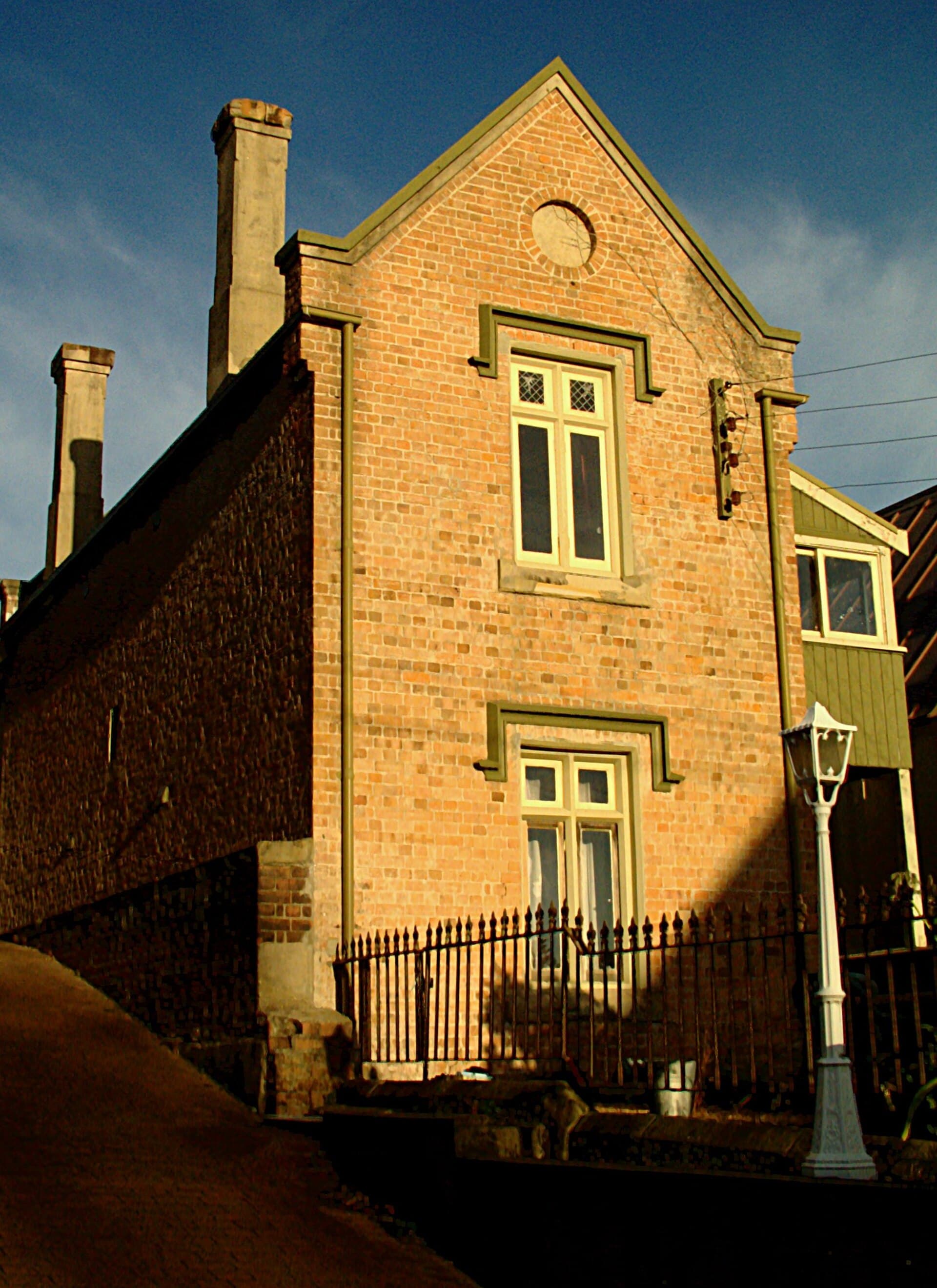
Photo: Mark McIntosh. Residence, The Hill. CC BY-SA 4.0. Source on Wikimedia Commons. Licence. Full credits on the image credits page.

Sale method is not a personality test. It is a timetable with different punishments for being late. In Newcastle the same weatherboard can be an auction in Hamilton one season and a quiet private treaty the next, and buyers still bring one inspection habit to both.
This essay is about the habit you need for each. The legal clock — five business days, or none — is in timing your inspection around exchange. What the inspector is allowed to see is in the pre-purchase cover piece. What follows is tactics: when to book, what a vendor report is worth, and how a street in Cooks Hill does not behave like a street in Charlestown.
Inspect before you bid, not as a courtesy to yourself
At a NSW auction there is no cooling-off. A nod is a contract. The building report, the pest report, the awkward phone call about the rear wall — all of that belongs in the campaign, while you can still go home.
The useful auction sequence is dull on purpose:
- Walk the house once as a buyer, not as a tourist of the kitchen.
- Book a licensed inspector that week, not “once we know we’re in love”.
- Get access organised while the agent still wants your attendance at the next open.
- Attend the inspection. Hear the serious items in the driveway.
- Read the PDF with the limitations-first method.
- Write a walk-away price. Then decide whether you are still a bidder.
A pre-auction inspection on the morning of the sale is how people acquire a PDF they will not read. You may get a verbal. You will not get time for a plumber’s camera, an engineer’s hour, or a change of mind that you can act on. If the only slot left is that morning, you are already late. Bid only if you are prepared to own every limitation the inspector is about to write.
Private treaty is kinder only if you use the kindness. You can inspect after exchange, inside cooling-off. You can also inspect before you offer, which is what you should do on any house that will attract a crowd. An offer made “subject to a building inspection” is only as strong as the agent’s willingness to carry it and the vendor’s willingness to wait. In a hurry, that clause is the first thing you will be asked to drop.
A walk-away price is a number, not a mood
Buyers say they have a limit when they mean they have a hope. A walk-away price after an inspection is a different object. It is the most you will pay for this house, with these defects, on this street — not the most you would have paid for the listing photograph.
Build it from three parts:
- what you would have paid if the report had been boring
- a realistic cost for the work you cannot decently ignore — roof, structure, wet areas, pests — from trades, not from a group chat
- a margin for the items the inspector could not see
The third part is the one auction rooms erase. A locked subfloor in an old Hamilton terrace is not a small courtesy issue. It is a hole. If you cannot price the hole, you should not be bidding as if the house were fully inspected. Walking away is sometimes the whole strategy.
Write the number down before auction day. Tell the person who is bidding with you. The point of writing it is not virtue. It is so the theatre of a packed room on Darby Street does not renegotiate the report for you.
In a private treaty the same number is what you take into a request, or into a decision to sit on your hands. Using a report to renegotiate only works if you know which items are the negotiation and which are the cost of owning an old house in this climate.
Vendor reports are someone else’s document
It is now common, in the inner suburbs especially, for a vendor to commission a building report and leave it on the kitchen bench as if it were a floorplan. Sometimes this is good faith. Sometimes it is sales furniture.
A vendor report can be useful. It can also be:
- weeks old, written before the last rain or the last tidy
- written with better access than you will be given — empty rooms, a cleared manhole — or with worse
- scoped to flatter: outbuildings excluded, a “friendly” classification of a tired roof
- a building report without a timber pest inspection, offered as if the two were the same afternoon
You may read it. You should not bid from it. Commission your own if the money is serious. Compare the two if you have time: not to catch a villain, but to see whether the roof void was entered twice or once, and whether the language has cooled. The limitations and exclusions essay is the right mood for this comparison.
If the vendor will not allow a second inspection because “there is already a report”, you have learned something about the sale that is not in the PDF. At auction, that something is a reason to stay in the room only as a spectator. In a private treaty it is a reason not to waive cooling-off.
A pest report sitting next to a building report does not merge them into one fact. Combined versus separate still applies. Termite risk in the Hunter does not pause for a vendor’s tidy folder.
Private treaty is a negotiation with a clock
Private treaty looks calmer than an auction because the violence is spread over emails. The inspection strategy is still a strategy.
Inspect before the offer when the house will be wanted — a cottage on a pretty street in Cooks Hill, a renovated terrace in Hamilton, anything that will have two couples on the footpath at the second open. You want the report in your pocket so the offer can be clean, or so you can leave without performing a cooling-off.
Inspect in cooling-off when you have it, when the house is not a scrum, and when you have already booked the inspector so the five days are not spent on the phone. This is the Charlestown brick veneer, the quiet lake street, the listing that has been in the window long enough for the balloons to look tired. You still do not dawdle. You just do not pretend you are in a bid-by-Saturday story.
Use the report as a specific request, not as a mood. “The roof is at the end of its life; here is a roof plumber’s range” is a conversation. “Your house failed the inspection” is a tantrum. Vendors in this city have heard the tantrum. They have not always heard a number.
Do not spend the last day on a second emotional visit. Spend it on the one specialist the report named, or on the decision. The after the inspection work — living with a fair report, sequencing repairs — starts after you have either exchanged for keeps or rescinded.
New houses and off-the-plan leftovers have a different private-treaty flavour again: warranties that are not inspections, incomplete work, paint that hides last month. That psychology is in new builds versus established homes.
Three streets, three tempos
The Hunter is not a single auction culture. Using one suburb as a template for another is how people waive cooling-off in a quiet street and bid blind in a loud one.
Hamilton
Victorian stock, lanes, a terrace that photographs like a magazine and crawls like a damp problem. Auctions are common when the street is pretty. Inspect early. Assume the subfloor and the roof void will be the argument. Tenanted houses need notice; start that conversation at the first open, not the week of the campaign’s end. A vendor report on Beaumont Street is a starting document. It is not your document.
Cooks Hill
Similar age, tighter parking, more people who will fall in love with a colour and skip the piers. Pre-auction inspections book out because everyone had the same idea on the same Tuesday. If you want a slot, you want it at the start of the campaign. Walk-away prices matter here because the room will be full of people who have not read their own PDFs. Your advantage is not courage. It is having done the reading.
Charlestown and the newer brick suburbs
More private treaty, more 1970s–1990s veneer, more “it’s a good block”. Auctions happen, but the hurry is often manufactured. Inspect, by all means — bathrooms, roofs, the particular suburban gift of a tired deck. Do not be bullied into auction-brain. Cooling-off still exists on a private treaty, and a house that has been on the market for a stretch will not vanish because you took four days to get a plumber to look at a wet-area note.
Inner-city apartments and Merewether townhouses sit in another category: lot versus common property, balconies, records. See strata and townhouse inspections. Coastal stock from Stockton across has salt in the timetable as well as in the steel; the housing stock hub is the longer map.
What you take into the room
Whether the room is an auction or an agent’s office, you should be able to say, in one breath:
- what was inspected and what was not
- which items are safety or structure
- what those items are worth to you
- the number at which you stop
If you cannot say those things, you are not using a report. You are carrying a file. The pre-purchase hub is for people who would rather be the former. The house will still be there after the hammer, or after the email. Your job is to know whether you still want it, at a price that has met the inspector’s sentences and not only the listing’s adjectives.
Questions readers ask
- Is a vendor’s building report good enough to bid on?
- It is information written for someone else, often on a different day, sometimes with different access. Use it to decide whether to commission your own, not as a substitute for one.
- When should I inspect if the house is going to auction?
- Early in the campaign, with time to read, to ring the inspector, and to walk away. The morning of the auction is a gesture, not a strategy.
- Can I still renegotiate after a private-treaty inspection?
- Yes, if the report has priced work the vendor did not advertise. How far you get depends on the street, not on the volume of the PDF.
Keep reading
Strata and townhouse inspections in Newcastle
Lot versus common property, the access you will not get, and why a harbour apartment and a Merewether townhouse need the same walk-through and a different set of records.
Priya Nair · 14 August 2024 · 11 min read · Photo: Sardaka, CC BY-SA 4.0

New builds versus established homes — the inspection
Why a finished-looking new house still needs a walk-through, how warranties are not reports, and what old paint and new paint each hide in the Hunter.
Helen Cartwright · 9 July 2024 · 10 min read · Photo: Orderinchaos, CC BY-SA 3.0

Timing your inspection around exchange in Newcastle
How to use the NSW cooling-off, and why auction buyers have none — access, tenants, wet weather, and the pace of the Hunter market between open home and exchange.
Sophie Brennan · 21 May 2024 · 10 min read · Photo: Mark McIntosh, CC BY-SA 3.0