Strata and townhouse inspections in Newcastle
Lot versus common property, the access you will not get, and why a harbour apartment and a Merewether townhouse need the same walk-through and a different set of records.
By Priya Nair, Housing stock editor · 14 August 2024 · Updated 2 February 2026 · 11 min read
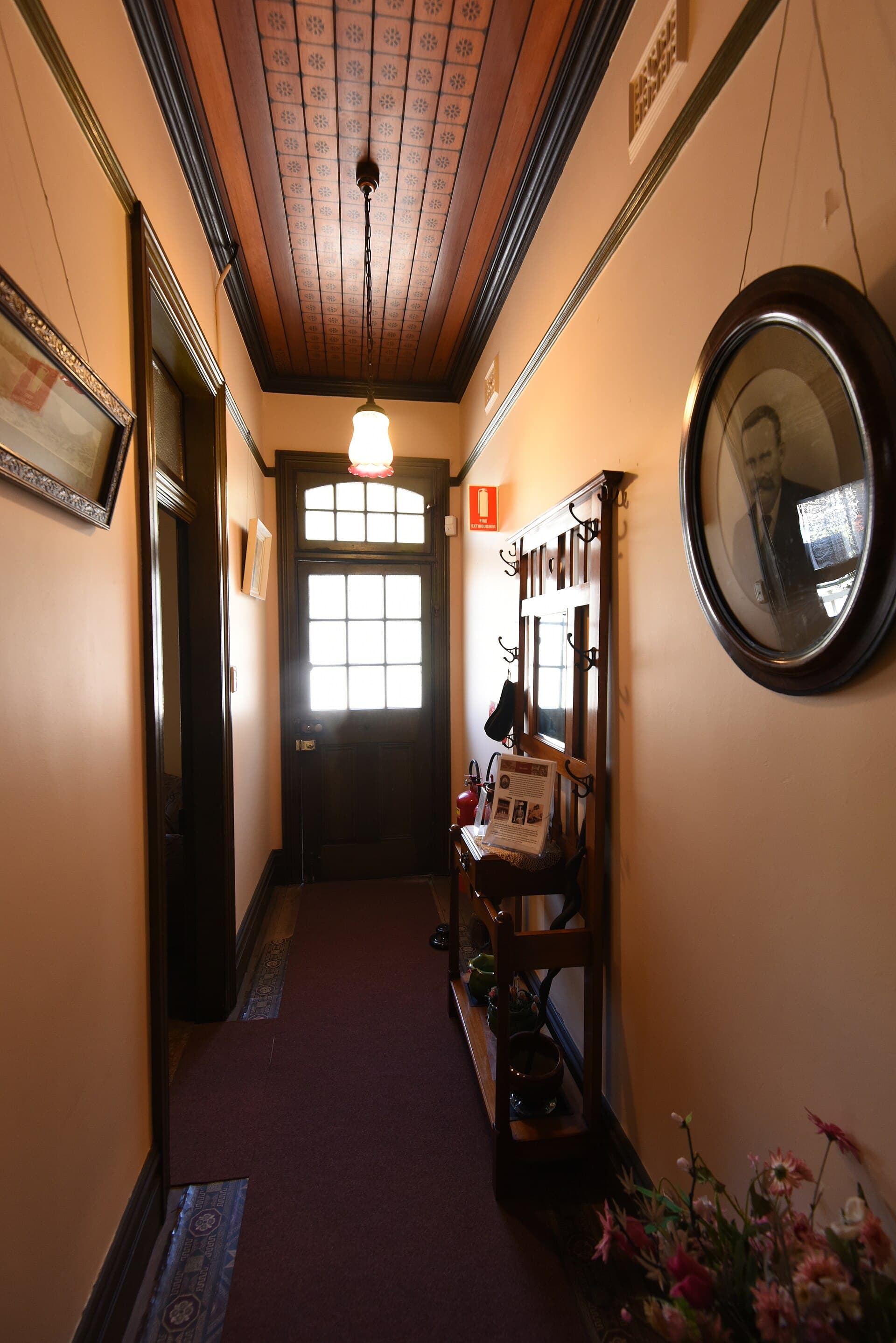
Photo: Sardaka. Miss Porter's House. CC BY-SA 4.0. Source on Wikimedia Commons. Licence. Full credits on the image credits page.

A house on its own block is a simple political object. You buy the land, the roof, the argument with the sky. A lot in a strata scheme is a share of a small government. The inspector can walk through your rooms. They cannot, from that walk, tell you whether the government is solvent, or whether the balcony you loved at the open home is about to become a special levy.
This essay is about the inspection you still need, and the records that inspection cannot replace. For the standard job on a free-standing house, start with what a pre-purchase building inspection covers. For how to read the PDF when it arrives, use the AS 4349.1 method. What follows is the extra politics of apartments and townhouses in Newcastle.
Lot versus common property is the first sentence
In a strata scheme the building is split, on paper, into lots and common property. The exact split is in the strata plan, not in the agent’s adjectives. A courtyard might be a lot. A courtyard might be common property with exclusive use. A balcony membrane might be the scheme’s problem, or yours, or a fight that has already started in the minutes.
The inspector is not a strata lawyer. They are not required to interpret the plan while standing in your kitchen. They are required to inspect reasonably accessible parts of the residence you have asked them to inspect, and to say what they could not reach.
In practice that means:
- inside the lot — rooms, wet areas, visible structure, the obvious water stains, the doors that catch
- the edges — windows, the face of a balcony you can stand on, the ceiling that might be someone else’s floor
- common property they can see without a roof-access permit and a committee’s blessing — entries, stairwells they are shown through, the exterior from the ground
It does not mean a report on every unit, a condition survey of the whole roof, or a certificate that the scheme has been waterproofed. If you need the whole building, you are commissioning a different job, and probably a different professional.
Read the strata plan before you book, or at least before you decide the report was “clear”. A clear report on a lot with a sick balcony that is common property is not a clear purchase. It is a clear lot and an unread scheme.
Access is smaller than buyers think
“Reasonably accessible” does more work in a unit than in a cottage. There is often no subfloor. There is often no roof void that belongs to you. There is a balcony door, a bathroom, and a front door that opens onto a corridor the inspector does not own.
Typical limits on a Newcastle job:
- roofs — on a harbour apartment the roof is a plant room and a committee. On a two-storey townhouse in Adamstown it may be a pitch you can see from the yard and not from a hatch
- balconies and decks — visible from inside; not a drop over the edge; not a test of the membrane
- neighbours — the stain on your ceiling may be their shower. The inspector can note the stain. They cannot book their bathroom
- locked storage, cages, garages — if the key is with a tenant or a remote that “isn’t here today”, that space is a limitation, not a footnote
- external walls on upper floors — seen from the ground or from the balcony, not from a swing stage
If a tenanted unit will not be opened beyond the living room, you do not have a strata-specific problem. You have the ordinary access problem, with less building around it to compensate. Timing the inspection still applies. So does the rule that a hole in the report is a hole in the purchase.
Townhouses tease you with house-like access — a yard, a side path, sometimes a manhole — and then stop you at the shared roof, the shared driveway and the wall that is also someone else’s wall. Inspect them as neither a cottage nor a tower. Inspect them as a lot with extra doors.
Harbour apartments and suburban townhouses are different buildings
Newcastle’s strata stock is not one product. Using a unit in a new tower as a template for a 1970s walk-up, or a Merewether townhouse as a template for a harbour glass box, is how people buy the wrong further-investigation.
Harbour and civic apartments
The buildings that sell on the view live in wind, salt and a vertical stack of wet areas. The inspection conversation is about:
- windows and sliders that face the weather
- balconies, planters and the junction between tile and threshold
- the envelope you can see from inside and from the street
- whether the “renovated kitchen” has moved wet areas without a conversation with the scheme
You will not, from the lot, know the state of the façade program. You will know whether this balcony feels like a maintenance plan, and whether this bathroom has already begun to talk to the ceiling below. Salt does not stay on the foreshore out of politeness. It is in the fittings, the fixings and the patience of every seal.
Townhouses in Merewether, Adamstown and the inner south
These are closer to houses that happen to share a roof or a driveway. The conversation is about:
- roofs you can only half see
- rear yards, retaining, and surface water that has nowhere honest to go
- the party wall and the addition that may have been a lot-owner’s idea
- ageing common stairs, older waterproofing, and the particular suburban gift of a timber deck off the main bedroom
A pretty townhouse behind a hedge in Merewether can inspect like a cottage until you ask who owns the roof. An Adamstown walk-up can inspect like a cheap unit until you notice the lot includes a courtyard that is quietly drowning the subfloor of the building. The housing stock hub is the longer map of the fabric. The inspection is how you stop flattening it into “strata”.
New townhouse estates on the lake and in the release suburbs have the new-build psychology as well as the strata one: paint, warranties, incomplete common landscaping. Read them against new builds versus established homes and then come back to the minutes.
Records versus the walk-through
Buyers still arrive at exchange with one of the two documents and a feeling that the other would have been overkill.
The walk-through tells you what your lot is doing today: the shower, the ceiling, the door that sticks, the balcony that drains inward, the smell in the downstairs store. It will not tell you that the scheme has been arguing about the same balcony for three annual general meetings, or that the sinking fund is a wish.
The records — strata report, minutes, by-laws, insurance, the plan — tell you what the government has been doing: levies, defects claims, disputes, pets, flooring rules, a façade that is about to become a number. They will not tell you that the vendor’s bathroom has been leaking since the last minutes were typed.
You need both. The order is a matter of days, not of ideology. In a private treaty, start the records when you start the inspector, because neither will arrive because you are anxious. At auction, both have to sit inside the campaign; there is no cooling-off in which to discover that the roof is a levy and the shower is a stain. The auction versus private treaty tactics still hold. The documents are just more numerous.
Council and building-approval records sit in a third pile: lot-owner renovations, the studio that was a bedroom, the wet area that moved. A strata scheme can approve a renovation on paper and still leave you with a bathroom the inspector does not like. Paper is not a membrane.
When the two stories disagree — calm minutes, angry bathroom; angry minutes, calm bathroom — believe both. The first is a future cost you will share. The second is a present cost that may be yours alone. Renegotiation has to name which of those you are talking about. Vendors can do something about a leaking shower. They cannot privately repair a façade.
Waterproofing and balconies are the local refrain
If this journal has a strata chorus, it is water at the edge of the lot.
Balconies fail in ways a visual inspection can hint at and cannot finish. Tiles that sound hollow, a threshold lower than the outside floor, rust at a balustrade base, a planter that has been treated as furniture rather than as a wet structure, doors that swell in the southerly. The inspector can photograph these. They cannot core the slab or peel the membrane. “Further investigation” here is often a waterproofing specialist or an engineer, and it is one of the times that phrase is a map rather than a shrug.
Bathrooms and laundries in a stack are a neighbour problem wearing your paint. A stain in a downstairs lot is an upstairs story until proven otherwise. A townhouse bathroom over a living room is the same physics with fewer strangers. The inspector notes what they can see and measure. They do not give you a warranty. If the report says further investigation, book it while you still have a timetable.
Roofs and external walls that are common property will only partly appear in your report. A townhouse roof seen from the yard, an apartment façade seen from the street — these are clues for the records, not a substitute for them. If the minutes are already talking about water and the inspector is already talking about water, you are not looking at two small problems. You are looking at one building.
None of this is a reason to treat every balcony as a disaster. It is a reason not to buy a view as if the view included the membrane.
Timber pests have a quieter strata life and still count. A ground-floor townhouse with a garden bed against the slab is not exempt from termite risk in the Hunter because there is an owners corporation. A combined building-and-pest is still two standards; the combined-versus-separate essay applies in a unit as in a cottage, even when there is no crawl space to romanticise.
What to take to the inspector, and what to take to the records
Bring to the inspection:
- which spaces are the lot — garage, cage, courtyard, attic if any
- the rooms the open home skipped
- any story the vendor told about a renovation, a leak, a “body corporate job”
- enough time to stand on the balcony and look at the threshold, not only at the water
Bring to the records:
- the items the inspector could only see from one side
- every mention of water, cladding, balconies, insurance, levies
- a question about who pays for the thing you have just fallen in love with
If the two piles together still will not let you sleep, that is a walk-away. Strata purchases go wrong when people treat the scheme as atmosphere and the lot as the whole building. The inspection is the lot, honestly seen. The records are the government. After the inspection you still have to decide whether you want to be a citizen of it.
Choose a licensed inspector who will write the access they did not get, rather than a compliment about the kitchen. Read the limitations as if they were the point — in a unit, they often are. Then decide. The harbour will still be the harbour. The townhouse hedge will still be a hedge. The report is how you stop buying a lifestyle and start buying a lot.
Questions readers ask
- Does a building inspection cover the whole strata scheme?
- No. A standard pre-purchase inspection is about the lot you can access, and only the common property the inspector can reasonably see. The scheme’s health lives in the records as well as in the walk-through.
- Should I still inspect a townhouse if I have the strata report?
- Yes. Minutes will not tell you that the shower is leaking into the lot below, and a walk-through will not tell you that the roof fund is empty. You need both.
- Are harbour apartments riskier than suburban townhouses?
- They are different. Salt, wind, balconies and a vertical stack of neighbours are one set of problems. Shared roofs, rear yards and ageing walk-up blocks in Merewether or Adamstown are another.
Keep reading
New builds versus established homes — the inspection
Why a finished-looking new house still needs a walk-through, how warranties are not reports, and what old paint and new paint each hide in the Hunter.
Helen Cartwright · 9 July 2024 · 10 min read · Photo: Orderinchaos, CC BY-SA 3.0
Auction versus private treaty inspection strategy
Inspect before you bid, set a walk-away price, and treat a vendor report as someone else’s document — with the different tactics that work in Hamilton, Cooks Hill and Charlestown.
Sophie Brennan · 18 June 2024 · 11 min read · Photo: Mark McIntosh, CC BY-SA 4.0
Timing your inspection around exchange in Newcastle
How to use the NSW cooling-off, and why auction buyers have none — access, tenants, wet weather, and the pace of the Hunter market between open home and exchange.
Sophie Brennan · 21 May 2024 · 10 min read · Photo: Mark McIntosh, CC BY-SA 3.0