Termite risk in the Hunter
Coptotermes and Nasutitermes in Newcastle and the lake suburbs — climate, conducive conditions, and the difference between a sign and evidence, without the scare percentages.
By Tom Reilly, Timber pest correspondent · 20 February 2024 · Updated 20 January 2026 · 12 min read
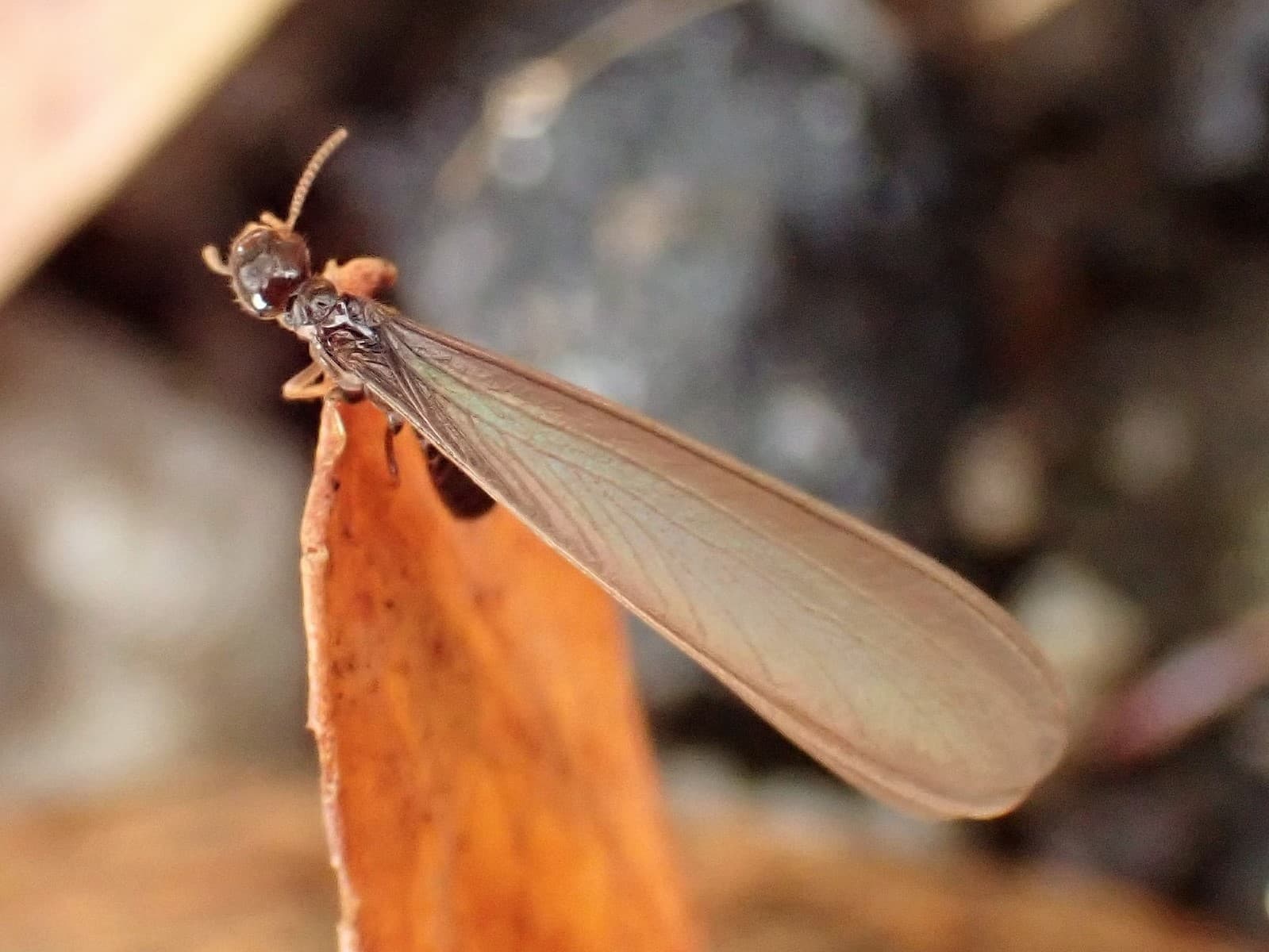
Photo: Mike (via iNaturalist). Coptotermes acinaciformis. CC BY 4.0. Source on Wikimedia Commons. Licence. Full credits on the image credits page.

Termites in the Hunter are not a Sydney problem that drifted north on a furniture truck. They are local animals, working local timber, in a climate that rarely gives them a reason to stop. Buyers still treat a pest report as a formality — something you tick so the bank is quiet — and then look surprised when the inspector spends twenty minutes in a damp subfloor in Mayfield talking about mudding on a bearer.
This essay is about risk as a set of conditions, not a treatment catalogue and not a scare. If you want the method, read what a timber pest inspection looks at. If you want the paperwork of combining jobs, that is another essay. The natural history belongs here, in the pest and termite hub.
The animals, not the brand names
Coptotermes acinaciformis is the subterranean termite that does the expensive work in this part of New South Wales. It lives in the ground and in trees, forages through galleries of soil and chewed wood, and will follow moisture into a weatherboard cottage as readily as into a 1970s brick veneer. It does not need a coloured blob on a real-estate map labelled “termite area”. It needs cellulose, a concealed path, and enough damp to keep the workers alive between the nest and the meal.
A Coptotermes colony is not a few insects in a skirting board. It is a large, organised foraging network. The nest may be in the ground, in a tree on the block, or in a tree two houses over. The damage in your architrave can be the edge of a system whose centre you will never see on inspection day. That is why “we had a look in the roof” is not the same as understanding the site.
Nasutitermes is the other genus buyers actually notice, because it is willing to be obvious. Along the coastal strip the usual encounter is an arboreal carton nest — a dark, paperish mass on a gum in a Stockton, Merewether or Redhead backyard — rather than a mound on the lawn. Inland and on drier ground you may meet mound-builders in the same genus. Nasutitermes will work timber in and around a house. It is not garden sculpture. It is also not a substitute identification for Coptotermes. A nest in a tree is a fact about that tree and about foraging range. It is not a clearance certificate for the dwelling.
Other subterranean species turn up in coastal New South Wales. You do not need their names to buy a house in Waratah. You need an inspector who can tell live workings from old ones, and who will write the genus when they have actually seen the soldiers.
I will not give you a percentage of Hunter houses with active termites. Those figures get invented in sales decks, rounded up at trade nights, and then quoted as if they were a council survey. What can be said without lying is simpler: the species are established, the climate is kind to them, and a visual inspection is a look at accessible timber on one afternoon, not a census of the suburb.
A climate that stays useful to insects
The Hunter is not tropical. It does not have to be. Warm months, humid nights, summer storms, and a coastal strip that rarely dries to the bone are enough. Lake Macquarie suburbs add still air and a water table that sits close to the underside of older houses. The coalfield towns are drier in a westerly, then wet again after a week of easterly rain.
Termites forage in winter here. They forage more when it is warm and the ground is wet. Swarming — the brief flight of winged reproductives — tends to sit in spring and early summer after rain, which is why a pile of discarded wings on a windowsill in October is a piece of natural history, not a mystery. The wings are a sign that a colony in range produced alates. They are not, on their own, a map of which wall is occupied.
None of that is a calendar you can use to skip an inspection in July. A pest inspection in a dry August can look calmer than the same house after a wet February. Moisture meters read differently. Fresh mudding is easier to see when it is still damp. Old workings look the same all year. The insects do not file a notice of intention with NSW Fair Trading when the weather turns.
Conducive conditions, which are not evidence
Inspectors talk about conducive conditions because the standard asks them to, and because the house is often doing the insects a favour. The phrase is easy to skim past in a PDF at 11 pm. It means the building is offering shelter, moisture, or a bridge from soil to timber.
Typical Hunter offerings:
- a leaking shower that has been “fine for years” and is quietly watering the subfloor
- downpipes that dump onto the ground against a weatherboard wall
- garden beds built up over weepholes, vents and ant caps
- timber lattice, deck posts, sleepers or firewood in contact with soil
- a subfloor with vents painted shut, or blocked by an outdoor unit
- formwork left in the ground from an old pour
- air-conditioning condensate dripping into a cavity
- a bathroom renovation that never quite flashed the hob
- plastic sheeting or stored junk on the soil under the house, trapping humidity against bearers
A conducive condition is a reason to look harder, and a reason to budget for maintenance if you buy. It is not a finding of termites. The timber pest inspection essay is blunt about the difference between a sign, an indication, and live insects in the hand. The subfloor ventilation piece is the local version of why coastal and lake houses stay wet enough to matter.
Inner-suburb weatherboard cottages collect several of these conditions at once: original timber floors close to the ground, later bathrooms punched into old rooms, and gardens that have been raised by generations of keen owners. Brick veneer in Charlestown or a project home on the western edge of Lake Macquarie can offer a slab-edge story instead — weep holes blocked, garden against the wall, a timber-framed addition on the low side of the block. The cladding changes. The physics of damp timber does not.
Signs, evidence, and the wish to be told it is fine
Buyers want a yes or a no. Termites do not organise their work that way.
Signs are things that suggest timber pests have been, or could be, in play: mud tubes on a pier, frass in a window sash, hollow-sounding architraves, a carton nest within foraging range, discarded wings, timber that looks “eaten” from the outside, paint that ripples over a hollow.
Evidence of activity is stronger: live termites, fresh mudding, workings that are still moist and occupied. That is the line that should stop a hurried reading of the report. It is also the line that should send you to treating versus monitoring before you start arguing with the vendor about a tin of something from a hardware aisle.
Damage can be historic, active, or both. A cottage in Hamilton can carry fifty years of patched skirtings and still have a live gallery in a bearer you will not see without crawling. Historic damage without current activity is not “nothing”. It is a record that the site has been used, and a question about what has been done since.
Live insects versus old workings
Old workings that are dry and abandoned are a history, not a current colony. The history still matters. It tells you the construction was reachable. It tells you a previous owner may have treated, or may have painted over the evidence and sold. It does not tell you, from a torch beam, whether a colony has simply moved two metres into a cavity the inspector is not allowed to open.
The inspector is not paid to soothe you. They are paid to say what they found in accessible areas, and what they could not see. That limitation is not a dodge; it is the job. Read it in the limitations essay before you treat a “no live termites found” line as a warranty. A pre-purchase building inspection may note conducive conditions. It is not a pest report unless you paid for one to AS 4349.3.
Why the coast and the lake stay wet
From Stockton to Redhead the air carries salt and moisture together. Salt is a steel story — that essay lives with coastal corrosion — but moisture is a termite story. Salt does not keep Coptotermes out of a house. Damp timber and a dark subfloor will do more for a colony than a sea breeze will do against it. Carrington, Maryville, Newcastle East, Bar Beach, Merewether and Dudley are not “safe” because they are near the water. They are damp because they are near the water.
Lake suburbs from Belmont around to Toronto, and up through Warners Bay and Speers Point, have a different wet: less salt, more stillness, often a high water table, often an older timber floor close to the ground. After rain the crawl space smells like a riverbank. That smell is information. It is not a diagnosis, but it is a reason not to skip the hatch.
The same logic applies, more quietly, to the inner suburbs that are neither beach nor lake. Cooks Hill, The Hill, Hamilton, Waratah, Mayfield and Tighes Hill sit on mixed fill, original subfloors, and a century of plumbing experiments. Housing types across that range are gathered in the Hunter housing hub. Termites do not read the hub. They read the moisture.
Seasons, auctions, and the cooling-off fantasy
If you are buying in this city, the inspection happens when the contract allows it to happen. You do not get to wait for the “termite season” as if the insects kept office hours. Walking away is sometimes the only honest response to live termites in a structure you cannot afford to open up. Staying is a maintenance decision, not a vibe.
A combined “building and pest” is the usual package in Newcastle. It is two standards pretending, at the quote stage, to be one afternoon. Do not pretend otherwise. The pre-purchase hub will tell you what the building walk is for. This hub is for the insects.
What a buyer is supposed to do with this
Risk, in this journal, is not a colour on a heat map. It is a pile of ordinary facts:
- the species are here
- the house is timber, or has timber in it
- water is getting to places water should not stay
- access on inspection day was incomplete
- nobody has looked under the house for a decade
- a tree nest sits inside foraging distance of the back wall
You can live with a fair amount of that if you are the sort of owner who maintains things. That is a temperament, not a slogan — see living with a fair report. You cannot live with a colony in a bearer by hoping it is a problem for somewhere south of the Hawkesbury.
Commission a timber pest inspection. Be present if you can. Read the limitations before the summary. If the report is fair and the insects are absent from the accessible timber, you still own the conducive conditions. They do not vanish at settlement. What you do next belongs in the after the inspection essays, not in a hardware-store aisle on Saturday morning.
A note on this journal
We do not treat houses. We do not sell bait stations. We do not rank pest firms. The point of this page is to make the insects ordinary enough that you will pay for someone qualified to look, and then actually read what they wrote.
Questions readers ask
- Are termites only a problem in older weatherboard houses?
- No. Coptotermes will work a brick veneer, a 1990s project home and a renovated terrace if timber and moisture give them a path. Age and cladding change how you look, not whether you look.
- Does a dry winter mean I can skip the pest inspection?
- No. Termites forage year-round in this climate. A dry August can make mudding harder to see. It does not send the colony on holiday.
- If the inspector finds no live termites, is the house clear?
- It is clear of live termites in the areas they could access on that day. It is not a warranty, and it is not a statement about the wall cavities they could not open.
Keep reading
Subfloor ventilation and moisture in coastal Newcastle
From Stockton to Redhead the crawl space stays wet — blocked vents, plastic on soil, bathrooms leaking into the dark, and why lake suburbs and rising-damp language keep getting in the way of a clear diagnosis.
Tom Reilly · 5 September 2024 · 10 min read · Photo: DaHuzyBru, CC BY-SA 4.0
Treating versus monitoring after a termite find
Live termites in a Newcastle purchase are a decision, not a weekend DIY job — chemical barriers and baiting in general terms, structural repairs, vendor obligations, and the case for walking away.
Tom Reilly · 27 June 2024 · 11 min read · Photo: Michael Gardner, Public domain
What a timber pest inspection looks at
A practical account of AS 4349.3 in Newcastle and the Hunter — soundings, mudding, frass, roof voids, subfloors and the landscaping that feeds a house, plus the cavities no honest inspector will pretend to have seen.
Tom Reilly · 2 May 2024 · 11 min read · Photo: Sam Wilson, CC BY-SA 2.0