Thermal imaging and moisture meters — when they matter
What a moisture meter and a thermal camera actually measure on a Hunter house, where they lie, and when they should change a recommendation rather than decorate a report.
By Mark Ellison, Standards editor · 16 May 2024 · Updated 7 January 2026 · 10 min read
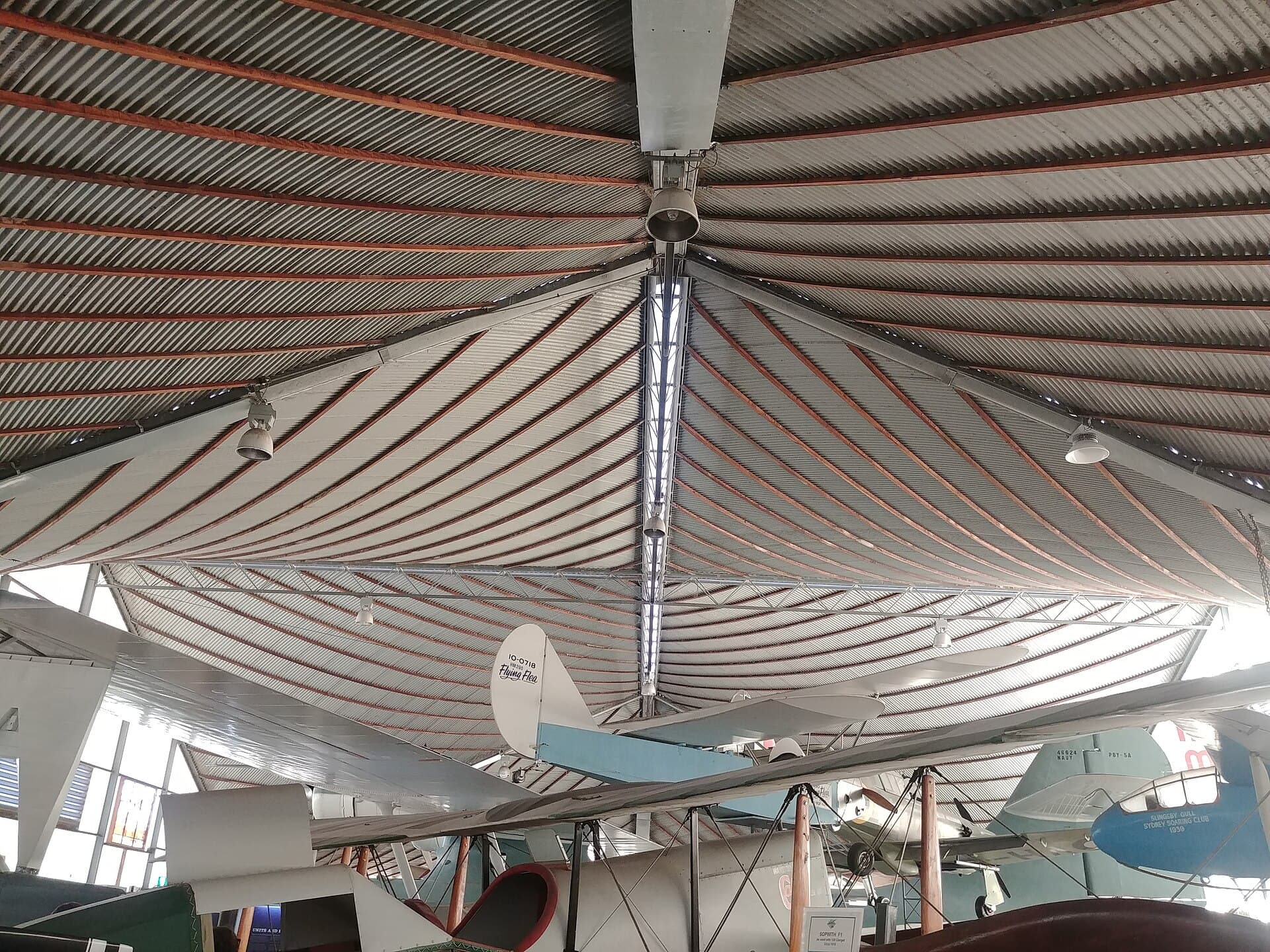
Photo: Sam Wilson. Timber and iron roof structure. CC BY-SA 2.0. Source on Wikimedia Commons. Licence. Full credits on the image credits page.

A thermal camera is a thermometer that paints. A moisture meter is a guess about how electricity is behaving in a wall. Neither is a diagnosis, and both can make a cautious inspector look either brilliant or reckless depending on the afternoon. In Newcastle they appear in reports as if they were extra sight — a way of promising that the visual inspection was not only visual. Sometimes they earn that promise. Often they decorate it.
This essay is about when the tools matter. It is not a product review. If you want the job they sit inside, read what a pre-purchase inspection covers. If you want the fence around that job, read limitations and the fine print. The reports and standards hub is the wider file.
What a moisture meter is measuring
Most meters used on a house are one of two kinds, and both are indirect.
Pin meters push two electrodes into a surface and measure electrical resistance. Water conducts better than dry timber, so a lower resistance is reported as a higher moisture content. The number is most at home in timber, where the relationship has been studied. In plasterboard, render, or brick, the same number is a comparison, not a laboratory result.
Pinless meters sit on the surface and read a change in the electrical field — capacitance, dielectric behaviour, call it what the manual calls it. They do not make holes. They also do not know, by themselves, whether they are looking at water, foil-backed plasterboard, a pipe, a nest of nails, or a salty old wall.
What neither meter measures is “a leak”. They measure a property that often moves when moisture moves. That is useful. It is not a photograph of water.
A competent inspector uses a meter as a comparison tool: this stained corner against that dry corner, this skirting against the one in the next room, this ceiling below the bathroom against the ceiling in the hall. A single dramatic reading on a single material, with no reference, is a party trick.
What a thermal camera is measuring
Infrared cameras measure radiation from surfaces and turn it into a colour picture of temperature. They do not see through walls. They do not see water. They see that this patch of plaster is cooler or warmer than the plaster beside it.
Moisture can create a temperature difference, because evaporation cools a surface. So can missing insulation, a draught, a downlight, a steel lintel, the sun on a western wall at three o’clock, or an air-conditioner that has been running since breakfast. A roof void under corrugated iron in a Hunter summer is a theatre of temperature. The camera will find a show. It may not find a defect.
Used well, thermal imaging is a way of deciding where to look more carefully — where to run a meter, where to stand longer, where to say “I cannot see this, and someone with a licence to open it should”. Used badly, it is a rainbow printed on page twelve to justify a fee.
False positives, and the Hunter’s favourites
The tools fail in ways that are boring and local.
Metal and foil. Pinless meters love foil-backed insulation, sarking, and plasterboard with a foil lining. Thermal cameras love the same materials for different reasons: they reflect the operator, the sky, or a hot roof. A curved timber and corrugated-iron roof can throw reflections that look like a leak and are only a bright afternoon.
Salts. Older masonry in Newcastle — terraces in Hamilton and Civic, cottages with a history of rising damp — can carry salts that fool a resistance meter. The wall is not necessarily wet in the way a buyer means. It may be an old injury, a tide mark, or a repair that trapped the problem.
Bathrooms. A shower used this morning will wet tiles, grout, and sometimes the board beyond. A meter that sings on a bathroom floor is not news. A meter that sings on the ceiling below the bathroom, or on the hallway side of the wet-area wall, is a different sentence. Even then, condensation from a hot shower and a cold void can mimic a leak.
Condensation in voids. Roof spaces in this climate wet and dry with the weather. A camera pointed at the underside of iron on a cool morning will find cold metal and, sometimes, actual water. The question is whether the water is a roof that has failed or a void that cannot breathe. The camera does not know.
The sun. Thermal images taken after a northerly wall has been baked are pictures of sunshine. Serious thermal work on envelopes is often done when surfaces have settled. A pre-purchase slot at midday in February is not a laboratory.
Paint and coverings. Fresh paint hides stains and fools eyes. It does not always fool a meter, which is one reason meters exist. It can still fool a camera if the surface temperature is even. A newly “refreshed” bathroom in a house that smells of silicone is a reason to use the tools. It is also a reason not to trust them alone.
None of this means the tools are useless. It means a beep is not a finding. The finding is the argument: visual stain, or no stain; reading here, not there; history of the room; access to the void above; a recommendation that follows.
Bathrooms, laundries, and the rooms people renovate first
Wet areas are where buyers most want a magic camera, because the expensive failures live behind tiles.
A standard visual inspection can see failed sealant, drummy tiles, a soft floor, staining on the ceiling below, a water mark on the outside of the hob. A meter can tell you that the board at the edge of the shower is not as dry as the board in the bedroom. A camera can show a cool patch that matches the shower tray.
What none of them can tell you, from a walk-through, is that the membrane was installed to the manufacturer’s detail in 2019. That is a different job — invasive, or a paper trail. The council records essay is about the paper. The tools are about the present tense of the surface.
When the tools should change the writing:
- a ceiling below a bathroom that is unmarked to the eye but consistently higher on the meter than the rest of the ceiling
- a cool, regular patch on a camera that sits under an ensuite and is dry to a casual look
- a laundry wall that reads wet on the kitchen side
- a balcony door threshold that looks fine and meters like a sponge
When they should not:
- a bathroom floor an hour after a shower
- a single pinless spike on foil board
- a colourful roof-void image with no corresponding stain, smell, or meter work
- a marketing page of rainbows and no recommendation
“Further investigation by a licensed plumber” or “wet-area specialist” is the honest next sentence when the tools and the eyes disagree, or when they agree and the repair is behind the tile. It is not a dodge if it is specific. It is a dodge if every wet room says “monitor” and the appendix is a gallery.
Roof voids, iron, and the space above your head
Hunter roof voids are where tools earn their keep and lose it.
Entry is already a limitation. Many inspectors will stand at a hatch with a camera and a torch because the void is tight, the insulation is deep, or the timber does not invite a crawl. A thermal glance from the hatch can show a damp patch on the back of a ceiling, a missing bat of insulation, or a downlight cooking its surround. It can also show the underside of iron doing what iron does.
A moisture meter on a rafter or a top plate can confirm that a stain is active, or at least recent. It cannot date the leak. It cannot tell you the flashing was wrong in 2004. It can tell you this timber is not like that timber, today.
If the inspector never entered and the camera was used as a substitute for entry, the report should say so. A colour image is not access. The limitations essay is blunt about that, and how to read the report will teach you to look for the sentence that admits it.
Corrugated iron, especially on older curves and additions, is a generous source of condensation stories. Coastal jobs add salt. Leaf-blocked gutters add overflow that looks like a roof failure from below. The tool that matters first is still a pair of eyes on the gutter and the ceiling. The meter is the argument about whether the timber has taken it up.
When a tool should change a recommendation
The only interesting question is consequence.
A tool matters when it moves the inspector from “no sign” to “there is a reason to open this”, or from “old stain” to “this is still wet”. That movement should appear in the report as a recommendation you can hand to a contractor, a vendor, or yourself: engage a plumber, budget to lift tiles, treat this as a major until proven otherwise.
A tool does not matter when it produces a picture and the recommendation stays “general maintenance”. Pictures are fine. They are not a finding.
Buyers in a hurry treat every colour blotch as a renegotiation. Using a report to renegotiate is a craft that depends on defects you can defend. A vendor’s solicitor will not be frightened by a rainbow with no method. An engineer will not thank you for a JPEG of a western wall at 2 pm.
If you are choosing an inspector, ask how they use the tools, not whether they own them. Choosing a licensed inspector is the longer hiring note. Ownership of a camera is not a qualification. A method is.
What you should do with the pretty pages
Read them last. Read the limitations first, then the major defects and safety items, then the wet areas, then the appendix of images. If a thermal plate is offered as evidence, look for the matching sentence in the body. If there is no matching sentence, it is decoration.
Ask the inspector, if you attended, what they wanted the camera for. The useful answers are dull: “the stain on the dining ceiling”, “the wall under the shower”, “the hatch we could not enter”. The less useful answer is “we always shoot the whole house”.
Do not buy a separate “thermal inspection” from a stranger with a camera and no building standard unless you know what you are commissioning. A pre-purchase report has a fence. A gadget visit may have none, and the disclaimers will be no kinder for it.
The pre-purchase walk is still a walk. The tools are extra senses with extra ways to be wrong. Used by someone who will say when they are guessing, they can save you from a clean-looking ensuite. Used as a magic camera, they will sell you a colour and call it sight.
Questions readers ask
- Does a thermal camera see water in the wall?
- No. It sees surface temperature. A wet area can look cooler because water evaporates, or warmer because of heating or the sun. The camera is a prompt, not a diagnosis.
- Should I pay extra for thermal imaging?
- Pay for an inspector who knows when a tool changes the recommendation and when it is a picture. An add-on camera with no method is a colour brochure. A meter used on a stained ceiling can be worth the minute.
- If the meter beeps, is the bathroom leaking?
- Not by itself. Tiles hold shower water, salts confuse resistance meters, and a bathroom that was used an hour ago is supposed to be damp in places. The question is whether the reading sits with stains, movement, smell, or a history.
Keep reading
Building codes, council records and the inspection
Why a walk-through cannot replace a records search — complying development versus a DA in plain language, unapproved work, and where Newcastle, Lake Macquarie and Maitland keep the paper.
Mark Ellison · 17 September 2024 · 12 min read · Photo: Sardaka, CC BY-SA 4.0
Insurance and disclaimers — what a report cannot do
Professional indemnity in plain language, why AS 4349 reports disclaim so much, and what a Newcastle buyer can reasonably expect from a document that is not a warranty.
Mark Ellison · 11 June 2024 · 11 min read · Photo: Mark McIntosh, CC BY-SA 3.0

Limitations, exclusions and the fine print
What AS 4349 actually leaves out — inaccessible areas, furniture, locked rooms, roofs, and the “visual only” agreement buyers sign and then forget.
Mark Ellison · 19 March 2024 · 10 min read · Photo: Kabang Bladina Gideon, CC BY-SA 4.0